


Old Jersey Soccer: Top 10 Iconic Vintage Kits to Collect
Old jersey soccer is the collector’s term for authentic vintage football shirts from iconic international teams, prized for their historical significance and nostalgic power. The industry standard term is “classic football shirts,” and serious collectors use both phrases interchangeably. These shirts represent more than fabric and dye. They are physical records of legendary matches, unforgettable players, and the cultural moments that defined the sport. Major retailers have processed over 1 million shirts across two decades, proving that collector demand for historic soccer kits is not a passing trend.
1. What makes old jersey soccer collectibles worth pursuing?
The best vintage soccer jerseys combine rarity, cultural weight, and documented history. A shirt worn during a World Cup final carries a different kind of value than a replica produced for retail. Collectors distinguish two main categories: vintage originals, which are shirts produced during the actual era of play, and retro reissues, which are modern licensed reproductions made to honor classic designs. Understanding that distinction is the foundation of any serious soccer jersey collection.
2. Roberto Baggio’s 1992–1993 Juventus shirt
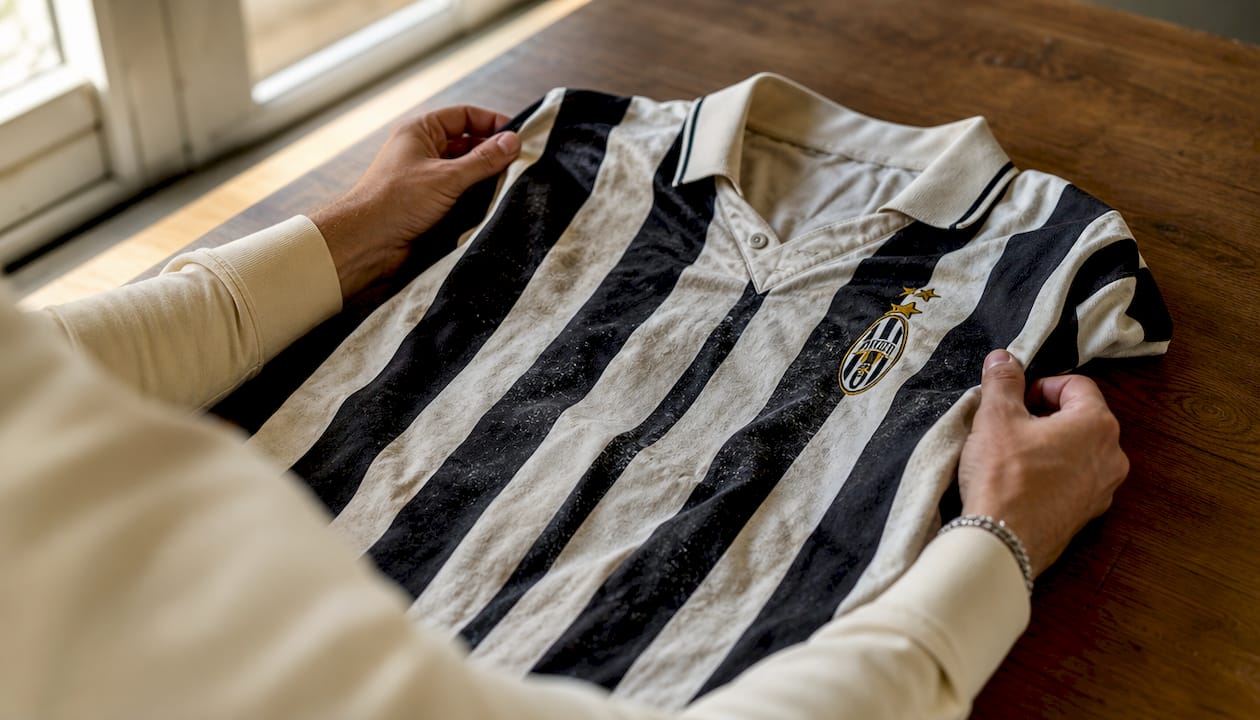
Roberto Baggio’s match-worn Juventus shirt from the 1992–1993 Serie A season is one of the most prized pieces in classic football shirt collecting. The shirt carries correct period tags, club and player identification, and a certificate of authenticity. That documentation is what separates a museum-grade collectible from a look-alike. Baggio was at the peak of his powers that season, making this shirt a direct link to one of soccer’s greatest individual talents.
3. Brazil’s 1970 World Cup yellow kit
Brazil’s 1970 World Cup shirt is the single most recognized jersey in soccer history. Pelé wore it during a tournament performance widely considered the greatest team display ever recorded. Authentic period examples are extraordinarily rare and command prices well above standard vintage ranges. Even licensed retro reissues of this kit sell consistently because the design itself carries universal recognition.
4. Argentina’s 1986 World Cup jersey
Argentina’s light blue and white striped shirt from the 1986 World Cup in Mexico is inseparable from Diego Maradona’s legend. The “Hand of God” and the “Goal of the Century” both happened in this kit. Collectors who want a piece of that era seek out original Adidas versions with the correct woven badge and period labeling. The Argentina national team kit has remained one of the most collected international designs across every decade since.
5. Netherlands’ 1988 European Championship shirt
The Dutch orange kit from Euro 1988 is a landmark in retro jersey styles. The Netherlands won their only major international trophy wearing it, with Marco van Basten scoring what many analysts call the greatest goal in tournament history. The shirt’s bold color and clean design have made it a permanent fixture in serious soccer jersey collections. Original versions feature the correct Dutch Football Association badge and period Adidas labeling.
6. Italy’s 1982 World Cup blue shirt
Italy’s 1982 World Cup shirt is the definition of understated elegance in historic soccer kits. The Azzurri won the tournament in Spain wearing a simple dark blue design with minimal branding. Paolo Rossi’s six goals in that tournament made this shirt synonymous with one of the sport’s great individual performances. Collectors prize original versions for their clean construction and the weight of history attached to them.
7. Germany’s 1990 World Cup kit
West Germany’s 1990 World Cup shirt represents the last tournament played before German reunification, adding political and historical layers beyond sport. The white Adidas kit with black and yellow trim is immediately recognizable. Lothar Matthäus wore it during a dominant individual World Cup performance. Original versions with the correct West German Football Association badge are increasingly rare and valuable.
8. France’s 1998 World Cup home shirt
France’s 1998 World Cup shirt marks the moment the host nation won its first world title. Zinedine Zidane’s two headed goals in the final against Brazil made this kit iconic overnight. The deep blue Adidas design with the gold star added after the tournament is the version most collectors seek. This shirt also represents the last era before modern performance fabrics changed jersey construction entirely.
9. AC Milan’s 1988–1989 European Cup shirt
Club jerseys belong in any serious collection alongside national team kits. AC Milan’s red and black striped shirt from the 1988–1989 European Cup season represents Arrigo Sacchi’s legendary squad at its peak. Marco van Basten and Frank Rijkaard wore this design during one of the most dominant club performances in European soccer history. Authentic versions carry the correct Adidas labeling and the period Serie A patch.
10. USMNT kits from the 1994 World Cup era
The United States Men’s National Team jerseys from the 1994 World Cup hold a special place in American soccer history. Hosting the tournament accelerated soccer’s growth in the United States, and the denim-inspired home kit became one of the most discussed designs of that era. Heritage kit collections from this period reflect the cultural moment when American soccer stepped onto the world stage for the first time at home.
Pro Tip: When evaluating any vintage kit from the 1980s or 1990s, check the inside back collar for the manufacturer’s label. Original period labels use specific fonts and stitching patterns that licensed reproductions rarely replicate exactly.
What distinguishes vintage originals from modern retro reissues?
The market distinguishes “vintage” as original production from the period and “retro” as modern licensed reissues. That difference matters enormously for value and authenticity. Vintage originals were manufactured during the actual era of play, using the fabrics, badge construction, and labeling standards of that time. Retro reissues are produced today under license to honor classic designs, but they use contemporary manufacturing methods.
Retro reissue jerseys feature heavier fabrics, boxier cuts, embroidered crests, and looser fits compared to modern game-use shirts. Those design choices are intentional. Retro reissues are made to be worn and appreciated rather than played in. Vintage originals, by contrast, were made for competitive use and show the construction standards of their era, including thinner fabrics, woven or printed badges, and period-specific sizing.
Collectors identify genuine vintage pieces by examining three things: the manufacturer’s label, the badge construction, and the fabric weight. Original labels from the 1980s and 1990s use specific typefaces and stitching that modern reproductions do not replicate. Certificates of authenticity matter most for match-worn or player-issued pieces. Without documentation, provenance claims are difficult to verify and prices drop accordingly.
Pro Tip: Cross-reference any vintage shirt’s label against collector databases like those maintained by dedicated classic football shirt communities online. Label variations by year are well documented and can confirm or disprove a seller’s dating claim.
To understand the full spectrum between authentic and replica pieces, the breakdown of authentic vs. replica jerseys is worth reading before you make any purchase.
How much do vintage soccer jerseys cost?
Licensed modern retro reissues retail between $45 and $125, while authentic vintage shirts start at $150 and reach $275 or more depending on condition and rarity. That price gap reflects the difference in production era, material authenticity, and collector demand. Player-issue and match-worn jerseys command prices well above $275 due to verified provenance and extreme rarity.
Five factors drive pricing in the vintage jersey market:
- Rarity. Shirts produced in small quantities or surviving in limited numbers command premiums.
- Condition. Unworn or lightly worn examples with no fading or damage fetch the highest prices.
- Player association. A shirt linked to a specific legendary player multiplies value significantly.
- Era. Pre-1990 originals are generally scarcer and more expensive than 1990s examples.
- Provenance. Documentation, certificates of authenticity, and clear ownership history protect and increase value.
Collector demand has grown steadily, and vintage soccer shirt culture has matured into a significant subculture with increasing archival efforts improving transparency for buyers. That maturity means pricing is more consistent than it was a decade ago, but rare pieces still generate competitive bidding.
Where to find authentic classic football shirts
Established retailers with long track records are the safest starting point. Retailers with 20-plus year histories have sold over a million jerseys globally and carry institutional knowledge about authentication that newer sellers cannot match. Their pricing reflects that expertise, but the reduced fraud risk justifies the cost.
- Specialized vintage shirt retailers. These stores catalog jerseys by era, team, and condition. They typically provide authentication documentation and have return policies for misrepresented items.
- Collector forums and communities. Online communities dedicated to classic football shirts maintain seller reputation systems and shared knowledge bases. Buying from verified community members reduces risk.
- Physical vintage sports stores. Handling a shirt before buying lets you examine labels, fabric weight, and badge construction directly. This is the most reliable authentication method available.
- Auction platforms. General auction sites carry vintage jerseys, but buyer protection varies. Always request detailed label photographs and ask for provenance documentation before bidding.
- Licensed retro retailers. For retro reissues rather than vintage originals, licensed retailers offer consistent quality and clear product descriptions. These are the right choice for collectors who want wearable pieces without authentication concerns.
When buying online, always request close-up photographs of the collar label, the badge stitching, and any player or match documentation. Condition grading varies between sellers, so ask specifically about fading, cracking, and any repairs.
Pro Tip: Proper care extends the life of any jersey in your collection. Learning how to wash soccer jerseys correctly prevents fading and fabric damage that permanently reduces a shirt’s value.
Key Takeaways
Authentic vintage soccer jerseys are the most valuable category in classic football shirt collecting because they combine original production materials, documented history, and irreplaceable rarity.
| Point | Details |
|---|---|
| Vintage vs. retro distinction | Vintage shirts are original period production; retro reissues are modern licensed reproductions. |
| Authentication markers | Check collar labels, badge construction, and fabric weight to verify a shirt’s era. |
| Price ranges | Retro reissues cost $45–$125; vintage originals start at $150 and rise well above $275 for match-worn pieces. |
| Sourcing safely | Buy from established retailers with long histories and always request provenance documentation. |
| Cultural value | Classic football shirts are recognized cultural artifacts that connect fans to iconic sporting moments. |
Why vintage soccer shirts have become cultural artifacts
The most interesting shift I have watched in this space is not the price increases. It is the change in how collectors talk about these shirts. Ten years ago, the conversation was almost entirely about rarity and condition. Now collectors discuss cultural significance, archival responsibility, and the stories a shirt carries.
Vintage soccer jerseys are increasingly considered cultural artifacts beyond their sporting value, with strong emotional connections for fans worldwide. That shift is real and I have seen it accelerate. A shirt from the 1986 World Cup is not just old fabric. It is a document of a moment that millions of people experienced together.
My advice to anyone new to this space: resist the pull of trendiness. The jerseys that hold value are the ones with genuine historical weight, not the ones that went viral last season. Condition and authenticity matter more than popularity. A well-preserved, documented shirt from a less famous tournament will outlast a hyped replica with no provenance.
The archival work happening in this community right now is genuinely exciting. Publications and dedicated collector communities are building reference databases that make authentication more accessible than ever. That transparency benefits every collector, but especially newcomers who are still learning to read labels and spot inconsistencies.
— Ruban
Goat-org has the retro soccer jerseys worth wearing
Collectors who want quality retro reissues without the authentication complexity of vintage originals have a clear option. Goat-org carries licensed fan jerseys from the international teams that matter most to soccer fans in 2026.

The 2026 USA home fan jersey is one of the most popular pieces on the site right now, timed perfectly for the World Cup year. Goat-org also stocks the 2026 Portugal home fan jersey and the Argentina 2026 fan jersey for collectors who follow the sport’s biggest international programs. Every jersey ships with attention to fit and quality, backed by positive customer reviews on delivery and construction. If you are building a soccer jersey collection that spans eras, these licensed pieces represent the current chapter of the same history you are chasing in vintage form.
FAQ
What is the difference between a vintage and a retro soccer jersey?
A vintage jersey is an original shirt produced during the actual era of play. A retro jersey is a modern licensed reproduction made to honor a classic design, typically using heavier fabrics and embroidered crests.
How do I spot a fake vintage soccer shirt?
Examine the collar label for period-correct fonts and stitching, check the badge construction for woven versus printed details, and request a certificate of authenticity for any match-worn or player-issued piece.
What are the most valuable old jersey soccer collectibles?
Match-worn and player-issued shirts with verified provenance command the highest prices, often exceeding $275. Shirts linked to World Cup-winning performances or legendary individual players are consistently the most sought after.
Where is the best place to buy classic football shirts?
Established specialized retailers with long track records and authentication guarantees offer the lowest fraud risk. Collector forums with verified seller systems are a strong secondary option for rare finds.
Are retro reissue jerseys worth collecting?
Retro reissues are worth collecting for wearability and fan connection, retailing between $45 and $125. They do not appreciate in value the way vintage originals do, but they represent the living continuation of soccer’s visual history.